
Popular Equipment For Solar Water Heater Installations You Should Know About
Explore key products that simplify installation processes and improve performance for solar water heating systems.
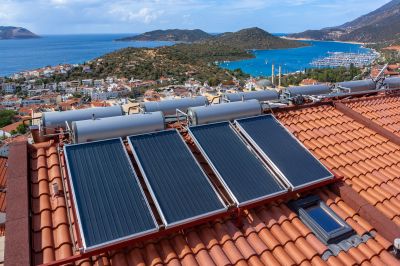 Installing a solar water heating system involves selecting the right components to ensure efficient and reliable operation. The core of these systems typically includes solar collectors, storage tanks, and auxiliary components such as controllers and pumps. Solar collectors are designed to absorb sunlight and transfer that energy to the water or a heat transfer fluid, which then circulates through the system to provide hot water for residential or commercial use. The choice of collector type—such as flat-plate or evacuated tube—can influence the system's efficiency and suitability for different installation environments.
Top Overall Option
Universal Solar Collector Panel
A versatile solar collector panel designed for a wide range of installation environments, featuring high-quality glazing and durable materials to maximize energy absorption. Its modular design allows for easy integration with various storage tanks and auxiliary components, making it suitable for both residential and commercial applications. The collector's efficient heat transfer capabilities and simple mounting system support straightforward installation and maintenance, providing a dependable component for solar water heating systems.
Types of Products For Solar Water Heater Installations
Flat-Plate Collectors
Flat-plate collectors are widely used for their straightforward design and reliable performance in moderate climates. They consist of a glazed, insulated box with a dark absorber plate that captures sunlight and transfers heat to water or heat transfer fluid.
Evacuated Tube Collectors
Evacuated tube collectors feature glass tubes with vacuum insulation, offering higher efficiency in colder conditions. They are suitable for areas with less consistent sunlight and can provide higher temperature outputs.
Integral Collector Storage Systems
These systems combine the collector and storage tank into a single unit, simplifying installation and reducing space requirements, often used in residential settings.
Batch Solar Water Heaters
Batch heaters are simple, tank-based systems that absorb sunlight directly through the tank, making them ideal for sunny climates and small households.
Thermosyphon Systems
Thermosyphon systems rely on natural convection to circulate water between the collector and storage tank, typically installed on rooftops for efficient operation.
Active Solar Water Heating Systems
Active systems utilize pumps and controllers to circulate heat transfer fluids, offering greater control and efficiency for varied installation conditions.
Passive Solar Water Heating Systems
Passive systems operate without mechanical pumps, depending on natural convection, and are valued for their simplicity and low maintenance.
Heat Exchangers
Heat exchangers facilitate the transfer of heat from the solar collector to the water, often used in systems where direct contact is not feasible.
Storage Tanks
Specialized tanks designed for solar water heating include features like insulation, corrosion resistance, and compatibility with high temperatures.
Control Units
Control units automate the operation of pumps and valves, optimizing system performance based on sunlight and water temperature.
Pumps and Circulators
These components facilitate the movement of heat transfer fluids within active systems, ensuring efficient circulation.
Mounting Brackets and Racks
Secure mounting solutions are essential for proper installation of collectors on rooftops or ground setups.
Insulation Materials
High-quality insulation minimizes heat loss from storage tanks and piping, enhancing overall system efficiency.
Expansion Tanks
Expansion tanks accommodate volume changes in the system due to temperature fluctuations, maintaining pressure stability.
Temperature Sensors
Sensors monitor water and system temperatures, providing data for control units to optimize operation.
Flow Meters
Flow meters help in measuring and managing the circulation rate of heat transfer fluids for system balance.
Popular Choices
A common choice for many installations, valued for their reliability and straightforward design.
Preferred in colder climates for their efficiency and ability to operate in low sunlight conditions.
Popular for their simple, gravity-based operation and ease of installation.
Complete kits with pumps and controllers are frequently sought for DIY installations.
Highly used for their capacity to retain heat and durability.
Essential for secure and efficient placement of collectors on rooftops.
Popular for automating system operation and improving efficiency.
Widely used in active systems to ensure consistent circulation of heat transfer fluids.
Frequently chosen for systems requiring indirect heat transfer.
Commonly selected to reduce heat loss in piping runs.
Popular for maintaining system pressure and accommodating thermal expansion.
Often used to monitor and control system performance.
Chosen for installations where roof mounting is not feasible or preferred.
Selected to improve heat retention in storage tanks and piping.
Popular among hobbyists and small-scale users for their ease of assembly.
Storage tanks are another critical component, often designed to withstand high temperatures and prevent heat loss. They come in various sizes and configurations, with some featuring insulation layers to maintain water temperature over time. Controllers and pumps automate the circulation process, optimizing performance based on sunlight availability and water demand. Properly integrating these components ensures the system operates smoothly, delivering hot water reliably. When selecting parts for a solar water heater, it is essential to consider compatibility, durability, and ease of installation.
Maintenance and longevity are also important factors. Regular checks of the collector surfaces, insulation integrity, and pump functionality can extend the lifespan of the system. Additionally, considering the local climate and installation conditions can influence the choice of materials and system design. Whether for a new installation or an upgrade, understanding these elements helps in making informed decisions that suit specific needs and constraints. Overall, a well-designed solar water heating setup can provide a consistent source of hot water while minimizing energy use and operational costs.
Key Buying Considerations
- Compatibility with existing plumbing and electrical systems
- Type of collector suited for your climate and installation site
- Capacity of storage tanks to meet household or business hot water demand
- Efficiency ratings and heat transfer performance
- Ease of installation and maintenance requirements
- Durability and corrosion resistance of materials
- Ease of integration with auxiliary heating options if needed
- Availability of technical support and warranty coverage
- Size and mounting options suitable for your space
- Cost and long-term operational expenses
- Material quality and manufacturer reputation
- System expandability for future capacity increases
- Compatibility with control and automation components
- Heat loss minimization features such as insulation
- Compliance with local codes and standards